
Ignorance – A Spiritual Story by Anthony de Mello
The young disciple was such a prodigy that scholars from everywhere sought his advice and marveled at his learning.
When the governor was looking for an adviser, he came to the Master and said, “Tell me, is it true that the young man knows as much as they say he does?”
“Truth to tell,” said the Master wryly, “the fellow reads so much I don’t see how he could ever find the time to know anything.”
This is from The Heart of the Enlightened, a book of spiritual stories by Anthony de Mello.
The Spiritual Moral / Meaning of This Story
The story of the young disciple serves as a profound commentary on the nature of knowledge and wisdom. It highlights the difference between accumulating information and truly understanding or knowing something. The interaction between the Master and the governor offers several spiritual lessons about the depth of learning, the importance of practical wisdom, and the value of lived experience.
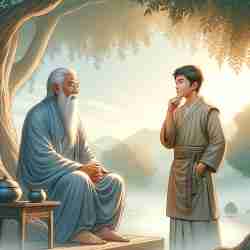 The first lesson is about the difference between knowledge and wisdom. The young disciple, despite being a prodigious reader, is implied to lack true understanding. This distinction teaches us that knowledge, which is the accumulation of facts and information, is not the same as wisdom, which involves the deep understanding and application of knowledge. Wisdom requires insight, experience, and the ability to discern and apply what one has learned in real-life situations.
Another moral of the story concerns the importance of practical experience. The Master’s wry comment suggests that the disciple’s extensive reading may have left little room for practical application. This underscores the idea that true understanding often comes from engaging with the world, making mistakes, and learning from those experiences. It encourages us to balance our intellectual pursuits with real-world practice, as wisdom is often forged in the crucible of lived experience.
The story also speaks to the value of depth over breadth in learning. The young disciple’s vast reading may have given him a broad range of knowledge, but the Master hints that this breadth may lack depth. This teaches us the importance of focusing deeply on a few subjects rather than skimming the surface of many. Deep engagement with a topic allows for a more profound understanding and the ability to apply knowledge meaningfully.
Furthermore, the story highlights the potential pitfalls of intellectual pride. The disciple’s reputation as a prodigy attracts scholars and the governor, but the Master’s comment serves as a humble reminder that true wisdom often goes unrecognized by those focused solely on intellectual achievement. This encourages us to remain humble in our learning and to recognize that true wisdom is often quiet and unassuming.
The interaction between the Master and the governor also emphasizes the importance of discernment in recognizing true wisdom. The governor seeks the Master’s opinion to verify the young man’s reputation, indicating that external accolades and recognition are not always reliable indicators of true understanding. This teaches us to look beyond superficial measures of success and to seek deeper, more meaningful indicators of wisdom and capability.
Additionally, the story illustrates the importance of critical thinking and reflection. The Master’s wry tone suggests a critical perspective on the young disciple’s learning methods. This encourages us to critically evaluate our own learning processes and to consider whether we are truly understanding and integrating what we learn, or merely accumulating information.
Lastly, the story imparts a lesson on the value of holistic learning. True wisdom encompasses not only intellectual understanding but also emotional intelligence, practical skills, and ethical considerations. The young disciple’s extensive reading may have focused on intellectual pursuits, but true wisdom requires a balance of all these aspects. This teaches us to cultivate a well-rounded approach to learning and personal growth.
Personal Reflection Questions:
Spiritual stories are an opportunity to reflect on your own life. Here are 10 questions you can use to go deeper with the teachings in this story:
- How do I balance the accumulation of knowledge with practical application in my life?
- In what ways can I deepen my understanding of the subjects I am passionate about?
- How do I differentiate between knowledge and wisdom in my own learning journey?
- What experiences have taught me the most valuable lessons in life?
- How can I remain humble in my intellectual pursuits and avoid the pitfalls of intellectual pride?
- What are the deeper, more meaningful indicators of wisdom that I can recognize in myself and others?
- How can I critically evaluate my learning processes to ensure I am truly understanding and integrating what I learn?
- In what ways can I cultivate a well-rounded approach to learning that includes emotional intelligence, practical skills, and ethical considerations?
- How do I apply the knowledge I gain in real-world situations to develop true wisdom?
- What steps can I take to balance intellectual pursuits with real-world experiences and personal growth?
A Poem Based On This Story
Wisdom Beyond Words: The Depth of True Understanding
In halls of learning, whispers tell,
Of a young disciple, learned well,
Scholars sought his counsel, praised,
In awe of knowledge he had raised.
The governor, with questions keen,
Asked the Master, wise and seen,
“Is it true, the young man knows,
As much as all his learning shows?”
The Master smiled, his eyes a gleam,
A wry reply, not what it seemed,
“Truth to tell,” he gently spoke,
“His reading’s vast, yet wisdom’s cloak.”
“For reading much, he surely does,
But knowing deep, that’s what one must,
His books are many, his hours long,
But where’s the time for wisdom’s song?”
For knowledge gained in endless streams,
Can drown the soul in shallow dreams,
But wisdom blooms in fields of life,
In joys and sorrows, peace and strife.
The young man’s books, a towering sight,
Yet wisdom walks in quiet light,
In lived experience, humble and true,
In heart and mind, in all we do.
So seek the depth, not just the span,
In learning’s journey, understand,
That wisdom’s path is slow and wide,
In every step, let heart be guide.