
Sufi and the Inn – A Spiritual Story by Anthony de Mello
A Sufi of forbidding appearance arrived at the doors of the palace. No one dared to stop him as he made his way right up to the throne on which the saintly Ibrahim ben Adam sat.
“What is it you want?” asked the King.
“A place to sleep in this inn.”
“This is no inn. This is my palace.”
“May I ask who owned this place before you?”
“My father. He is dead.”
“And who owned it before him?”
“My grandfather. He is dead too.”
“And this place where people lodge for a brief while and move on—did I hear you say it was not an inn?”
This is from The Heart of the Enlightened, a book of spiritual stories by Anthony de Mello.
The Spiritual Moral / Meaning of This Story
This story beautifully encapsulates the transient nature of life and the impermanence of worldly possessions and power. The Sufi’s interaction with the king, Ibrahim ben Adam, serves as a poignant reminder of the deeper truths about life, death, and our temporary stay on earth. Each aspect of the story reveals significant spiritual lessons about humility, detachment, and the eternal cycle of life.
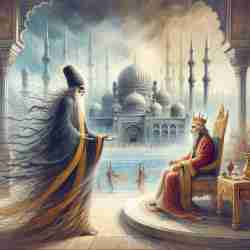 The first lesson is about the impermanence of worldly power and possessions. The king’s assertion that the palace is his is quickly challenged by the Sufi, who points out that the king’s predecessors, his father and grandfather, are no longer alive. This emphasizes that ownership of material possessions is temporary, and we are merely caretakers during our brief time on earth. The palace, which has seen many owners, symbolizes the fleeting nature of worldly possessions.
Another moral of the story concerns the nature of humility and detachment. The Sufi, with his simple and direct approach, contrasts sharply with the grandeur of the palace and the king’s authority. His demeanor and words remind the king that no matter how grand or powerful one might be, everyone is subject to the same cycle of life and death. This teaches us the importance of humility and not becoming too attached to our possessions or status.
The story also speaks to the idea of life as a journey. The Sufi refers to the palace as an inn, a place where people lodge temporarily before moving on. This metaphor highlights the transient nature of human life. Just as travelers stay briefly in an inn, so do we inhabit our bodies and the world for a short time before moving on. This perspective encourages us to focus on what truly matters, such as spiritual growth and meaningful relationships, rather than accumulating material wealth.
The interaction between the Sufi and the king also underscores the value of wisdom and perspective. The Sufi’s questions lead the king to a profound realization about the true nature of his palace and his life. This teaches us the importance of seeking wisdom and maintaining a broader perspective on our lives. It is easy to become consumed by our immediate surroundings and concerns, but stepping back to see the bigger picture can lead to deeper understanding and peace.
Additionally, the story highlights the universal nature of mortality. The Sufi’s reminder that both the king’s father and grandfather have passed away serves as a stark reminder that death is the great equalizer. Regardless of one’s status or wealth, everyone must face the end of life. This awareness can inspire us to live more authentically and purposefully, valuing each moment and each person we encounter.
The Sufi’s approach to the king also illustrates the power of simplicity and truth. His straightforward questions cut through the illusions of grandeur and permanence, revealing the underlying truth of the situation. This teaches us that sometimes, simplicity and honesty are the most powerful tools for understanding and conveying deeper truths.
Lastly, the story imparts a lesson on the importance of introspection and self-awareness. The king’s realization about the nature of his palace can be seen as a metaphor for our own lives. We often need reminders to look within and question our assumptions and attachments. By doing so, we can achieve greater clarity and alignment with our true values and purposes.
Personal Reflection Questions:
Spiritual stories are an opportunity to reflect on your own life. Here are 10 questions you can use to go deeper with the teachings in this story:
- What material possessions or status symbols am I overly attached to, and why?
- How do I view my own life in the context of its impermanence?
- What steps can I take to cultivate humility and detachment in my daily life?
- How can I shift my focus from accumulating wealth to fostering meaningful relationships and experiences?
- In what ways can I seek wisdom and maintain a broader perspective on my life?
- How do I cope with the awareness of my own mortality?
- What are the things I would regret not doing if my life were to end suddenly?
- How can I practice simplicity and honesty in my interactions with others?
- What legacy do I want to leave behind, and how can I start building it today?
- In what ways can I embrace the journey of life and make the most of my temporary stay on earth?
A Poem Based On This Story
The Inn of Life: A Journey of Transience and Truth
A Sufi came to palace grand, with eyes so wise and bold,
He faced the king upon his throne, a tale of truth to unfold.
“What is it that you seek?” asked he, the ruler in his pride,
“A place to sleep within this inn,” the Sufi then replied.
“This is no inn, this is my home,” the king declared with might,
Yet Sufi’s questions pierced the air, like stars in darkest night.
“Who owned this place before you, sire, who held this grand domain?”
“My father once,” the king replied, “but now his life has waned.”
“And who before him owned this hall?” the Sufi gently pressed,
“My grandfather,” the king confessed, “now laid in eternal rest.”
“So here they stayed, then moved along, as travelers do in inns,
Yet you declare this place your own, where life’s brief stay begins.”
The palace walls seemed less secure, the throne less grand and high,
As truth of life’s impermanence shone clear beneath the sky.
For we are but wayfarers here, our stay a fleeting breath,
No matter how we cling to life, we all must face our death.
The Sufi’s words, so simple, true, cut through the king’s façade,
Revealing life’s most precious gift, the transient path we trod.
So let us live with humble hearts, and cherish every day,
For life’s an inn where we reside, then journey on our way.