
A Miser’s Death – Spiritual Story by Anthony de Mello
The man begged and pleaded and used a thousand arguments to be allowed to live a little longer, but the angel was obdurate. “Give me three days of life and I shall give you half my fortune,” the man pleaded. The angel wouldn’t hear of it and began to tug at him.
“Give me just one day, I beg of you, and you can have everything I accumlated through so much sweat and toil.”
The angel was adamant still.
He was able to wring just one little concession from the angel — a few moments in which to write down this note:
“Oh you, whoever you are that happen to find this note, if you have enough to live on, don’t waste your life accumulating fortunes. Live!
My five hundred thousand dinars could not buy me a single hour of life!”
This is from The Heart of the Enlightened, a book of spiritual stories by Anthony de Mello.
The Spiritual Moral / Meaning of This Story
This story offers a profound reflection on the value of life versus the pursuit of wealth. The man’s desperate plea to extend his life in exchange for his fortune reveals deep spiritual truths about the nature of our existence and the priorities we set. Each aspect of the story underscores important lessons about the impermanence of life, the futility of materialism, and the essence of true living.
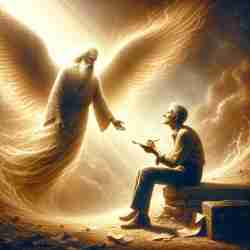 The first lesson is about the impermanence and unpredictability of life. The man’s desperation to prolong his life, even for just a few moments, highlights the inevitability of death and the transient nature of our time on earth. This teaches us to cherish each moment we have, as life can be unexpectedly short. It serves as a reminder to focus on the present and make the most of the time we are given.
Another moral of the story concerns the futility of accumulating wealth. The man’s fortune, amassed through years of hard work, proves useless in buying even an extra hour of life. This stark reality underscores the idea that material wealth cannot truly satisfy or save us in the end. It teaches us to reassess our priorities and recognize that true fulfillment comes from experiences, relationships, and inner peace rather than material possessions.
The angel’s refusal to grant more time, despite the man’s offers of wealth, symbolizes the impartiality and inevitability of death. Death does not discriminate based on wealth or status, and no amount of money can alter its course. This illustrates the equality of all human beings in the face of mortality and urges us to find value in aspects of life that are not bound by time or material measures.
The note the man writes serves as a powerful warning and a call to action for those who come after him. His message, to live life fully and not waste it accumulating fortunes, encapsulates the core spiritual lesson of the story. It encourages us to seek meaning and joy in our daily lives rather than postponing happiness for the sake of future gains.
Furthermore, the man’s final act of writing the note reflects a moment of clarity and wisdom. In his last moments, he realizes the true value of life and seeks to impart this wisdom to others. This highlights the importance of reflection and the need to periodically evaluate our lives to ensure we are living in alignment with our true values and purposes.
The story also touches on the concept of legacy. The man’s note is his final attempt to make a meaningful impact, hoping that his words will guide others towards a more fulfilling life. This teaches us that our true legacy lies not in the wealth we accumulate but in the wisdom and love we share with others.
Lastly, the story imparts a lesson on the importance of living authentically and mindfully. The man’s regret at not living fully is a poignant reminder to embrace life with all its joys and challenges. It urges us to live with intention, savoring each moment and prioritizing what truly matters.
Personal Reflection Questions:
Spiritual stories are an opportunity to reflect on your own life. Here are 10 questions you can use to go deeper with the teachings in this story:
- How do I currently prioritize wealth and material possessions in my life?
- What experiences or relationships bring me true joy and fulfillment?
- In what ways can I live more fully in the present moment?
- How do I balance my pursuit of financial stability with living a meaningful life?
- What are the things I would regret not doing if my life were to end suddenly?
- How can I ensure that my daily actions align with my deepest values and purpose?
- What steps can I take to cultivate inner peace and contentment?
- How do I handle the impermanence and unpredictability of life?
- What legacy do I want to leave behind, and how can I start building it today?
- In what ways can I share my wisdom and love with those around me?
A Poem Based On This Story
Live, Don’t Accumulate: The Precious Gift of More Time
In life’s swift race, we strive and toil,
To gather wealth, to till the soil,
Yet in the end, when time is nigh,
We find no treasure can life buy.
A man with riches, fortune vast,
Pleaded with death, his time surpassed,
“Give me just one more day to live,
My gold, my wealth, to you I’ll give.”
The angel stood with firm resolve,
No time to give, no wish to solve,
For life’s true wealth, it can’t be sold,
In moments lived, not in gold.
He wrote a note with shaking hand,
A final plea, a last command,
“Oh you who find this, heed my cry,
Live fully now, before you die.”
“For all my wealth, my gold so bright,
Could not extend my fleeting light,
If you have enough, then live, don’t wait,
For life’s true joy, don’t hesitate.”
In every breath, in every day,
Find love and laughter, come what may,
For when the end of life is near,
It’s memories, not wealth, held dear.
So heed the words of wisdom old,
Live now, don’t wait for life to unfold,
For riches gained can never buy,
The precious gift of more time.