
The Duck And The Slave
There one was a little boy visiting his grandparents on their farm. He was given a slingshot to play with out in the woods, but no matter how much he practiced he could never hit the target.
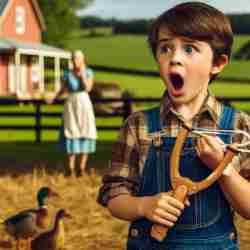
Getting a little discouraged, he headed back for dinner. While walking back, he saw Grandma’s pet duck. Just out of impulse, he let the slingshot fly, hit the duck square in the head and killed it. The boy was both shocked and saddened!
In a panic, he hid the dead duck in the wood pile; only to see his sister watching! Sally had seen it all, but she said nothing.
After lunch the next day Grandma said, ‘Sally, let’s wash the dishes’
But Sally said, ‘Grandma, Johnny told me he wanted to help in the kitchen.’
Then she whispered to him, ‘Remember the duck?’
So Johnny did the dishes.
Later that day, Grandpa asked if the children wanted to go fishing and Grandma said, ‘I’m sorry but I need Sally to help make supper.’
Sally just smiled and said, ‘Well that’s all right because Johnny told me he wanted to help’
She whispered again, ‘Remember the duck?’ So Sally went fishing and Johnny stayed to help.
After several day of Johnny doing both his chores and Sally’s; he finally couldn’t stand it any longer.
He came to Grandma and confessed that he had killed the duck. Grandma knelt down, gave him a hug and said, ‘Sweetheart, I know. You see, I was standing at the window and I saw the whole thing, but because I love you, I forgave you. I was just wondering how long you would let Sally make a slave of you.’
The author of this spiritual story is unknown and greatly appreciated!
The Spiritual Moral / Meaning of This Story
The story of the little boy, his slingshot, and his grandmother’s pet duck is a poignant tale that delves into themes of guilt, forgiveness, and the liberation that comes from confessing one’s mistakes. It provides deep insights into human behavior, the power of forgiveness, and the importance of personal integrity.
 The Burden of Guilt: The boy’s immediate reaction to accidentally killing the duck is to hide his mistake, which symbolizes the natural human tendency to conceal our wrongdoings out of fear of punishment or disappointment. This act of hiding the duck represents the burden of guilt that can weigh heavily on us when we try to cover up our mistakes. The story teaches that carrying guilt can lead to further complications and manipulation, as seen with Sally’s use of the incident to control her brother.
The Power of Forgiveness: The grandmother’s reaction upon hearing Johnny’s confession highlights the transformative power of forgiveness. Despite witnessing the entire incident, she chose not to confront Johnny directly but waited for him to come forward on his own. Her unconditional forgiveness underscores the idea that love and understanding can heal wounds and release us from the chains of guilt. The story illustrates that forgiveness is a powerful tool that can restore relationships and provide emotional and spiritual relief.
Liberation Through Confession: Johnny’s eventual confession to his grandmother symbolizes the liberation that comes from acknowledging and taking responsibility for our actions. This act of confession releases him from the control his sister had over him and frees him from the heavy burden of guilt. The story emphasizes that admitting our mistakes, despite the fear of consequences, is a crucial step towards personal growth and freedom.
The Importance of Personal Integrity: Johnny’s decision to confess, despite the possible repercussions, reflects the importance of personal integrity. This story teaches that maintaining integrity requires honesty and the courage to face the consequences of our actions. It highlights that true integrity involves not only admitting our faults but also seeking to make amends.
The Role of Compassionate Understanding: The grandmother’s compassionate response illustrates the importance of understanding and empathy in guiding others towards the right path. Her approach encourages an environment where mistakes can be acknowledged without fear of harsh judgment, promoting a culture of honesty and trust. This compassionate understanding can help individuals feel safe in admitting their mistakes and learning from them.
Manipulation and Its Consequences: Sally’s manipulation of Johnny through the “Remember the duck?” tactic demonstrates how guilt can be exploited by others to gain an advantage. The story serves as a cautionary tale about the destructive nature of manipulation and the importance of addressing wrongdoings directly to prevent such situations.
The Healing Power of Love: At its core, the story highlights the healing power of love and forgiveness. The grandmother’s loving forgiveness is a testament to the strength and resilience of familial bonds. It shows that love has the power to heal wounds, mend relationships, and foster an environment where individuals feel safe to be honest and vulnerable.
In essence, this story teaches us about the heavy burden of guilt, the liberating power of confession, the transformative effect of forgiveness, and the importance of maintaining personal integrity. It encourages us to seek honesty, embrace forgiveness, and cultivate compassionate understanding in our relationships.
Personal Reflection Questions:
Spiritual stories are an opportunity to reflect on your own life. Here are 10 questions you can use to go deeper with the teachings in this story:
- Burden of Guilt: Have you ever tried to hide a mistake out of fear? How did carrying that guilt affect you, and what ultimately happened?
- Power of Forgiveness: Can you recall a time when you were forgiven for a mistake? How did that forgiveness impact your relationship with the person who forgave you?
- Liberation Through Confession: Is there something you need to confess or take responsibility for? How might acknowledging this improve your peace of mind?
- Personal Integrity: How do you practice personal integrity in your daily life? Can you think of a situation where you had to choose between integrity and convenience?
- Compassionate Understanding: How do you respond when someone confesses a mistake to you? What can you do to foster an environment of understanding and empathy?
- Manipulation and Consequences: Have you ever been manipulated because of a mistake you made? How did you handle the situation, and what did you learn from it?
- Healing Power of Love: How has love and forgiveness helped heal a relationship in your life? What steps can you take to show more compassion and understanding to others?
- Learning from Mistakes: How do you view mistakes in your life? What lessons have you learned from acknowledging and addressing your own mistakes?
- Creating a Culture of Honesty: How can you contribute to creating a culture of honesty and trust in your family, workplace, or community?
- Overcoming Fear of Consequences: What fears hold you back from being honest about your mistakes? How can you overcome these fears to live with greater integrity?
A Poem Based On This Story
Remember the Duck: A Tale of Guilt, Forgiveness, and Liberation
In the woods, a boy did stray,
With slingshot in hand, he’d play each day,
But on one fateful, careless flight,
The slingshot took a duck’s life, out of sight.
Shocked and scared, he hid the deed,
In a pile of wood, with urgent speed,
But sister Sally saw it all,
And used it to make Johnny fall.
“Remember the duck,” she’d softly say,
And Johnny’s chores grew every day,
His guilt a chain, his heart confined,
By a sister’s words, so unkind.
At last, the boy could bear no more,
He ran to Grandma, heart so sore,
Confessed his sin, his secret shared,
In tears, his soul now fully bared.
Grandma knelt, her eyes so kind,
“I saw it all, but never mind,
My love for you will never fade,
For your mistake, you have paid.”
“I wondered when you’d set it free,
This burden that you hid from me,
For love forgives and sets aright,
The heart that’s brave enough for light.”
With Grandma’s hug, his heart did lift,
Released from guilt, a precious gift,
For in her love, he found the way,
To live with truth, each honest day.
So let this tale, a lesson be,
For guilt and lies will never free,
But love and truth will always show,
The path where light and peace can grow.