
Buddha: On Getting Insulted
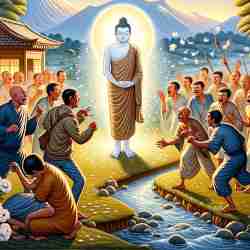
Buddha was passing through a village and the people came and they insulted him. They used all the four-letter words that they knew. Buddha stood there, listened silently, very attentively, and then said, ‘Thank you for coming to me, but I am in a hurry. I have to reach the next village, people will be waiting for me there. I cannot devote more time to you today, but tomorrow coming back I will have more time. You can gather again, and tomorrow if something is left that you wanted to say and have not been able to, you can say it. But today, please excuse me.’
Those people could not believe their ears: this man has remained utterly unaffected, undistracted. One of them asked, ‘Have you not heard us? We have been abusing you like anything, and you have not even answered!’
Buddha said, ‘If you wanted an answer, then you have come too late. You should have come ten years ago, then I would have answered you. But for these ten years I have stopped being manipulated by others. I am no longer a slave, I am my own master. I act according to myself, not according to anybody else. I act according to my inner need. You cannot force me to do anything. It’s perfectly good: you wanted to abuse me, you abused me! Feel fulfilled. You have done your work perfectly well. But as far as I am concerned, I don’t take your insults, and unless I take them, they are meaningless.’
When somebody insults you, you have to become a receiver, you have to accept what he says; only then can you react. But if you don’t accept, if you simply remain detached, if you keep the distance, if you remain cool, what can he do?
Buddha said, ‘Somebody can throw a burning torch into the river. It will remain alight till it reaches the river. The moment it falls into the river, all fire is gone; the river cools it. I have become a river. You throw abuses at me. They are fire when you throw them, but the moment they reach me, in my coolness, their fire is lost. They no longer hurt. You throw thorns, falling in my silence they become flowers. I act out of my own intrinsic nature.’
Source: The Book of Understanding by Osho
The Spiritual Moral / Meaning of This Story
The story of Buddha encountering insults in a village provides a profound lesson in mindfulness, self-mastery, and the transformative power of inner peace. The Buddha’s response to the villagers’ insults exemplifies a deep understanding of human behavior and spiritual wisdom. This story is a powerful reminder that true strength lies in our ability to remain unaffected by external negativity and to act in alignment with our inner truth. Let us explore the spiritual morals and meanings embedded in this tale.
 Inner Peace and Detachment One of the primary lessons of this story is the importance of cultivating inner peace and detachment. Buddha’s calm and composed reaction to the villagers’ insults illustrates the power of maintaining inner tranquility. By not allowing external events to disturb his peace, Buddha demonstrates that true strength comes from within. This teaches us that we have the power to choose our responses and remain unaffected by negativity, thereby preserving our inner harmony.
Self-Mastery and Autonomy Buddha’s response also highlights the significance of self-mastery and autonomy. He explains that he is no longer a slave to others’ actions and words, having mastered his own mind and emotions. This autonomy allows him to act in accordance with his inner values rather than reacting to external provocations. This moral encourages us to cultivate self-discipline and to act from a place of inner wisdom, rather than being swayed by external influences.
The Power of Non-Reaction The story emphasizes the power of non-reaction as a means of neutralizing negativity. Buddha’s refusal to accept the villagers’ insults renders them powerless. By not reacting, he deprives the insults of their intended impact. This teaches us that we can disarm negativity and conflict by choosing not to engage with it, thereby maintaining our own peace and integrity.
Transformation through Mindfulness Buddha’s metaphor of the river cooling the burning torch symbolizes the transformative power of mindfulness. Just as the river extinguishes the fire, our mindful awareness can transform negative energy into something harmless. This suggests that through mindfulness, we can process and neutralize negativity, allowing us to respond with compassion and wisdom. This moral encourages us to develop mindfulness as a tool for transforming our experiences.
Compassion and Understanding Buddha’s reaction also reflects deep compassion and understanding. He acknowledges the villagers’ actions without judgment and allows them to express themselves fully. This non-judgmental acceptance demonstrates a compassionate approach to dealing with others, even when they act out of ignorance or hostility. This teaches us to respond to negativity with compassion, recognizing that others’ actions often stem from their own suffering.
Living in Alignment with Inner Truth Finally, the story underscores the importance of living in alignment with our inner truth. Buddha’s actions are guided by his intrinsic nature, not by external pressures. This alignment with his inner truth allows him to remain serene and unaffected. This moral encourages us to live authentically, guided by our inner values and wisdom, rather than being influenced by external circumstances.
In conclusion, the story of Buddha and the villagers provides valuable spiritual lessons on inner peace, self-mastery, non-reaction, mindfulness, compassion, and living in alignment with our inner truth. By embracing these principles, we can cultivate a life of serenity, wisdom, and authentic self-expression. These insights inspire us to rise above external negativity and to act from a place of inner strength and compassion.
Personal Reflection Questions
Spiritual stories are an opportunity to reflect on your own life. Here are 10 questions you can use to go deeper with the teachings in this story:
- Have you ever experienced a situation where someone tried to provoke you? How did you respond, and how might you respond differently after reflecting on this story?
- What practices can you incorporate into your life to cultivate inner peace and detachment?
- How can you develop greater self-mastery and autonomy in your reactions to external events?
- Can you recall a time when you chose not to react to negativity? What was the outcome, and what did you learn from that experience?
- How can mindfulness help you transform negative experiences into opportunities for growth and understanding?
- In what ways can you practice compassion and understanding towards others, even when they are hostile or negative?
- What steps can you take to ensure that your actions are guided by your inner values and wisdom?
- How do you handle situations where others’ actions conflict with your inner peace? What strategies can help you maintain your tranquility?
- Reflect on a time when you were able to remain calm and composed in a challenging situation. What enabled you to do so, and how can you build on that ability?
- How can you use the metaphor of the river cooling the burning torch in your daily life to neutralize negativity and maintain your inner harmony?
A Poem Based On This Story
In the Face of Insults: The River’s Cool Embrace
In a village where the people jeer,
Buddha stands with mind so clear.
Insults thrown with fiery zest,
Yet in his heart, there’s only rest.
“Thank you for your words,” he says,
“But I must be on my way.
Return tomorrow, speak your mind,
For now, your anger I’ll not bind.”
The crowd is stunned, they can’t believe,
This man, unmoved, will simply leave.
“Have you not heard our words of spite?”
“We’ve insulted you with all our might!”
Buddha smiles, his eyes serene,
“In your anger, I see no sheen.
Ten years ago, I might have raged,
But now, my soul is disengaged.”
“I am my master, no longer swayed,
By others’ actions or what they’ve said.
I act from within, my spirit’s core,
Your insults reach me nevermore.”
“Throw a torch into the stream,
Watch as it cools, and loses gleam.
Your words are fire, fierce and hot,
But in my river, they burn not.”
“Thorns you hurl with malice keen,
In my silence, they grow green.
I am the river, calm and wide,
In my depths, your anger hides.”
“So speak your words, fulfill your need,
But know they cannot plant the seed.
For I am grounded in my truth,
Unaffected by your uncouth.”
The crowd, amazed, begins to see,
The strength in Buddha’s calm decree.
To be the river, cool and deep,
Where anger fades, and peace can sleep.